A break-in takes place every 2 minutes and 24 seconds in France. Every year, more than 218,700 break-ins are reported, and it takes a burglar just 11 minutes to carry out a crime. These alarming figures highlight a very real reality: protecting your home is no longer optional.
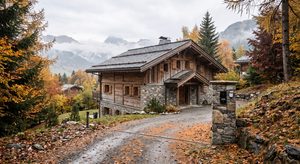
There are many isolated chalets and character houses. In Megève, Combloux, and Chamonix in particular, the risk of intrusion is even higher. Geographical isolation, prolonged periods of vacancy, and multiple access points make these properties particularly vulnerable.
In this context, choosing alarm systems that are suited to your type of home is essential to guarantee the security of your property and the peace of mind of the owners. Whether you live in your home year-round or are looking to protect a second home in the mountains. We will help you understand how to identify the most effective system for your specific needs.
Why adapt your alarm systems to your home
Choosing an alarm system cannot be limited to a simple online or catalog selection. It must be based on a thorough analysis of your home. The layout of your home is important. The surface area, number of openings, level of exposure, occupancy habits, and ease of access are all essential criteria that determine the effectiveness of the system. A compact apartment, a family home with a garden, or a remote cottage do not have the same requirements. Adapting your alarm systems to the nature of your home ensures optimal and lasting protection.
Which alarm system for a cottage?
In mountainous regions, chalets present very specific constraints. Their geographical isolation, as is often the case near Alpine resorts such as Megève or Combloux. It requires a robust and completely autonomous system. The sometimes extreme weather conditions (snow, frost, humidity) require equipment designed to function even in the event of a power or Internet outage.
The installation of autonomous alarm systems with GSM connections is recommended here. These systems ensure that alerts are transmitted to a remote monitoring center without relying on a local connection. It is also essential to cover secondary access points such as garages, basements, and balconies, which are often targeted in the event of an intrusion. Comprehensive perimeter protection is therefore recommended.

Which alarm system for an apartment?
In an apartment, the approach is different. This applies both in cities and in high-altitude residential areas such as Chamonix or Haute-Savoie. Access points to secure are more limited, but discretion and regulatory compliance are paramount. The ideal solution is based on compact, connected alarm systems designed for indoor detection: movement, door opening, attempted break-ins.
These devices must also comply with condominium rules, particularly with regard to noise and video surveillance. Thanks to intuitive mobile interfaces, users can activate or deactivate their system remotely. They can also view alerts or quickly check the status of their security system. This is particularly useful for second homes that are used seasonally or occasionally.
Which alarm system for a home?
A house, whether in a residential area or on the outskirts, has many vulnerable points. These include front doors, bay windows, side entrances, and outbuildings. Effective security for these areas requires a comprehensive alarm system. This should include perimeter sensors, motion detectors, audible alarms, and potentially connected cameras.
In many homes in Savoie and Haute-Savoie, where properties often have land or open spaces, installing outdoor protection is highly recommended. Adding automation, such as motorized gates or garage doors, also enhances security while providing everyday convenience.
The essential criteria for choosing your alarm systems
Regardless of the type of home, several factors must be taken into account in order to make the right choice. The quality and robustness of the equipment must be impeccable, especially if the system is exposed to extreme temperatures or frequent power cuts. The ergonomics of the device are also a key criterion: it must be easy to use, even for users who are not particularly tech-savvy. Finally, the system’s ability to evolve by integrating cameras, new sensors, or a connection to remote monitoring, for example, ensures its long-term relevance.
The reliability of the service provider, their ability to install, monitor, and maintain the system, as well as their personalized support, make all the difference between a standard system and a truly effective solution.
Why choose Home Security for your alarm systems
Home Security, a leading local security provider, designs and installs alarm systems tailored to homes and mountain environments. We operate throughout Megève, Combloux, Chamonix, and the entire Savoie and Haute-Savoie regions.
Our approach is based on in-depth technical analysis, professional custom installation, and ongoing support through maintenance, updates, and, if necessary, 24-hour remote monitoring. Whether you need security for your primary residence, an urban apartment, or a mountain chalet, we offer reliable, scalable solutions designed for the reality of your home.
Mistakes to avoid
Opting for a generic system without prior analysis is a common mistake. Incorrect sizing, poor installation, or lack of regular maintenance can render a device completely ineffective. It is also risky to confuse a standalone alarm system with a truly secure device. Without verification, human intervention, or reliable communication, an alarm alone is not enough to effectively deter or protect.
Alarm systems should be thought of as everyday allies. They protect your loved ones, your property, and your peace of mind, provided they are well chosen, properly installed, and well maintained. Whether you own an apartment in Chamonix, a chalet in Megève, or a house in Savoie, Home Security supports you with a tailor-made, reliable, and sustainable solution.