
Why is the Ajax alarm getting so much attention?
When you’re looking to secure your home, you’ll quickly come across a wide range of options. Some alarm systems are very basic, while others are more comprehensive, but it’s not always easy to understand what really sets one system apart from another. That’s exactly why the Ajax alarm has generated so much interest: it doesn’t just make a noise when a sensor is triggered. It was designed as a connected security solution, capable of detecting, transmitting, alerting, and helping you respond more quickly.
For a homeowner, the point isn’t to have a “more high-tech” system just for the sake of it. The appeal lies in having an alarm that works reliably day-to-day, remains easy to use, clearly communicates information, and integrates seamlessly with other tools like video surveillance or remote monitoring. The Ajax alarm is appreciated because it meets this very practical need: better protecting your home without ending up with a system that’s complicated to understand.
What exactly is an Ajax alarm?
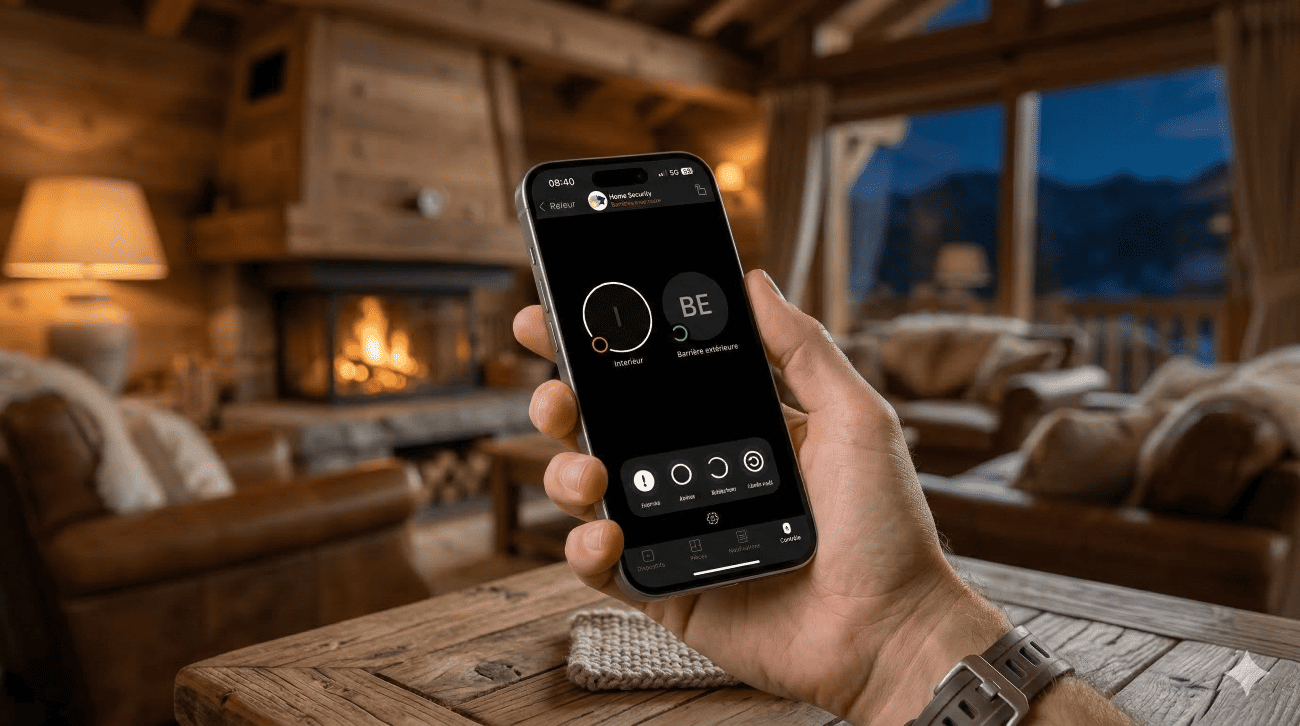
An Ajax alarm system consists of a control panel, detectors, sirens, and control devices such as a keypad, a remote control, or a mobile app. The control panel plays a crucial role: it receives information from the various detectors, analyzes it, and determines the appropriate response. If a window sensor signals that a window has just been forced open, or if a motion detector detects movement in a monitored area, the control panel immediately processes this information.
One of the key features that sets the Ajax alarm apart from a more basic system is the quality of communication between its components. In many older systems, a sensor sends raw data, and the rest of the system boils down to a siren. With a better-designed system, the information is clearer. We know which sensor was triggered, in which zone, and at what time, and this information can be transmitted to the homeowner or a remote monitoring center.
In other words, the alarm is no longer simply a device that “scares” the intruder. It becomes a tool that also helps occupants understand the situation and act with greater discernment.

The first real advantage: smarter detection
The primary advantage of an Ajax alarm lies in the quality of its detection. When people think of a motion detector, they often picture a small box that reacts to any movement. In reality, that’s the whole point: a good detector shouldn’t just detect—it should detect accurately.
In a home, two problems must be avoided. The first is missing a real intrusion. The second is triggering too many false alarms. An alarm that goes off for no reason eventually wears down its users. They’re more likely to disable it, trust it less, or react more slowly when it sounds. That’s why the quality of the sensors plays a central role.
An Ajax alarm relies on detectors designed to better distinguish between normal situations and suspicious ones. Without getting too technical, this means the system doesn’t “see” the world as a simple on/off switch. It analyzes variations, movements, and deviations from expected behavior. For the user, this translates to a more reliable system—and therefore one that remains trustworthy over time.
This is a key point, because the true effectiveness of an alarm system depends not only on its sound volume, but on its ability to trigger the right alert at the right time.
The second advantage: much clearer feedback
Many traditional alarms simply warn that something is happening, without actually letting you know what. One of the key benefits of an Ajax alarm is precisely the clarity of the information it provides. If an event occurs, the user can quickly determine which zone is affected and which sensor triggered the alarm.
This level of detail completely transforms the user experience. Instead of receiving a vague alert, you get more useful information. This allows you to decide faster on the appropriate course of action. If the alarm is paired with video surveillance, this understanding becomes even more immediate. The alert and the image can then complement each other. We no longer just know that there is a problem; we better understand what is happening.
In practice, this also improves remote surveillance management. The more precise the reported information is, the more effectively operators can respond. This is a very tangible benefit, even for a homeowner who isn’t familiar with the technical aspects.
The third advantage: easier to use for the whole family
A good alarm system is useless if it’s too complicated to use. This is a point that’s often overlooked. In a home, several people may need to interact with the system: parents, teenagers, authorized family members, and sometimes even trusted staff, depending on the situation. If arming and disarming the system is confusing, or if the rules for using it are too complicated, the system quickly becomes a burden.
The Ajax alarm is also popular because it simplifies the experience. Remote control, clear commands, and more intuitive operation allow households to take greater ownership of their home security. For a non-technical user, this is a real benefit. They don’t need to understand the system’s technical architecture to use it correctly.
This simplicity is important because it encourages regular use. After all, an alarm is truly useful when it’s activated consistently, not just when you’re away for a long time. A system that’s more user-friendly therefore has a direct impact on security.
The fourth benefit: better integration with video surveillance
Today, many homeowners no longer want to choose between an alarm system and video surveillance. They want more comprehensive protection. That’s where the synergy between Ajax alarms and video surveillance comes in.
An alarm detects and signals an event. Video surveillance, on the other hand, lets you see what’s happening or review what has happened. The two don’t serve the same purpose, but together they become much more effective. The alarm provides a rapid alert, and the camera provides context.
For a homeowner, the benefit is very tangible. If a notification arrives on their phone, they can more quickly verify whether it’s a real intrusion, unusual movement, or a less serious event. This doesn’t replace remote monitoring, but it significantly improves understanding of a situation.
In areas like Savoie or Haute-Savoie, where some homes may be more isolated, or in towns like Megève, Chamonix, or Sallanches, this link between alarm and video can be particularly useful. It allows for a more detailed view of the home’s perimeter, exterior entrances, garages, or outbuildings.
The fifth advantage: true compatibility with remote monitoring
The term “remote monitoring” comes up often, but many homeowners don’t always realize what a difference it actually makes. In practice, remote monitoring ensures that the user isn’t left alone to deal with an alarm. When the Ajax alarm is connected to a monitoring center, it’s not just the occupants who receive the alert. Trained operators also receive it and follow a specific protocol.
This is a significant advantage, because in a stressful situation, people don’t always react with a clear head. A nighttime alert, an attempted break-in, or a serious concern while the family is at home: in moments like these, having a human team take over is truly valuable. Security no longer relies solely on a ringing phone or the occupants’ ability to interpret what’s happening on their own.
The Ajax alarm thus becomes a gateway to more proactive security. We move from a simple detection approach to one that provides support in managing the event.

Why installation remains crucial
Even a high-quality Ajax alarm system can lose some of its effectiveness if the installation is poorly planned. This is a fundamental point. The best equipment in the world will never make up for a poorly placed detector, incomplete coverage, or overly vague settings.
A competent installer doesn’t just install components. They consider traffic flow within the home, the most vulnerable entry points, the household’s daily routines, and how the various components will interact. It is this work that allows the Ajax alarm system to reach its full potential.
At Home Security, this step is particularly important. The goal is not merely to install a high-performance solution, but to build a cohesive alarm system capable of operating reliably on a daily basis, with video surveillance and a connection to remote monitoring if needed. In areas such as Megève, Chamonix, Sallanches, Savoie, and Haute-Savoie, this adaptation to the home and its surroundings makes a real difference.
The real advantage of an Ajax alarm
The real advantage of an Ajax alarm system doesn’t lie in any single standout feature. It lies in the whole package. Better detection quality, clearer reporting, easier use, seamless integration with video surveillance, and natural compatibility with remote monitoring: it’s this combination that makes the solution appealing to homeowners.
Simply put, the Ajax alarm isn’t just appealing because it’s modern. It’s appealing because it better meets the current needs of households. It helps protect a home with greater responsiveness, clearer information, and more user-friendly operation. And when a professional like Home Security installs and configures it correctly, it becomes a particularly effective security tool for homeowners who want to go beyond a basic alarm system.
FAQ – Ajax Alarm
What is an Ajax alarm system?
An Ajax alarm system is a connected security system designed to quickly detect intrusions, send alerts, and provide easy day-to-day management. It can also be integrated with a video surveillance system and a remote monitoring service.
What are the benefits of an Ajax alarm for a home?
The Ajax alarm offers precise detection, clear reporting, convenient remote control, and good compatibility with other security solutions such as video surveillance or remote monitoring.
Is an Ajax alarm also suitable for an apartment?
Yes, an Ajax alarm is perfectly suited for an apartment. You simply need to configure the alarm system based on the size of the home, the number of entry points to monitor, and the occupants’ daily routines.
Can an Ajax alarm be connected to a monitoring service?
Yes, an Ajax alarm can be connected to a monitoring service. This allows operators to receive alerts, assess the situation, and trigger the appropriate actions if necessary.
Does the Ajax alarm work with cameras?
Yes, an Ajax alarm can be integrated into a broader system that includes cameras and video surveillance. This integration helps provide a better understanding of what is happening when an alert is triggered.


