

Security & Safety at a Chalet in Megève: Off-Season Guide
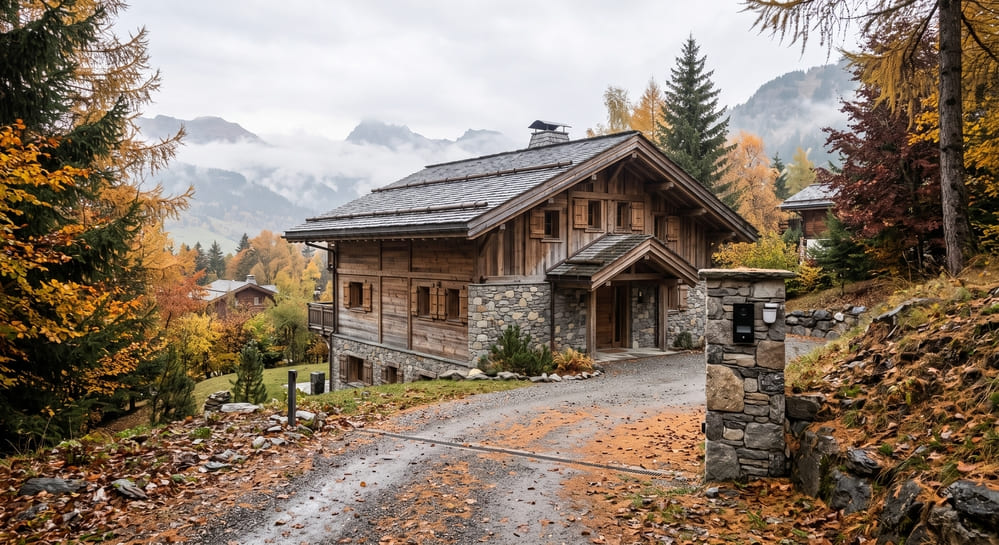
In Megève, the pace of life changes completely in the spring and fall—as soon as the slopes close at the end of April, and then after the summer vacationers leave in October. The resort regains a much-appreciated sense of calm. Businesses take a break, seasonal residents head home, and many chalets remain unoccupied for several weeks. This transition period is the ideal time to take stock of your property’s security. In the mountains, the remote location and tranquility of residential neighborhoods simply require a bit of foresight to avoid unpleasant surprises. Whether it’s an unwelcome visitor or a weather-related technical issue. Based in Megève since 1991, the Home Security team shares with you the best practices to ensure you can leave with peace of mind. Why Plan Ahead for the Off-Season at Your Vacation Home? Residents of Demi-Quartier often find themselves without immediate neighbors. This tranquility is pleasant, but it also means that no one is around to notice anything out of the ordinary on a day-to-day basis. Planning ahead for this time helps meet two simple needs: Proper preparation allows you to close up your cabin with peace of mind and find it in perfect condition for the following season. Automation and Locks: Effortlessly Secure Exterior Entrances The first step in prevention is to securely lock all exterior entrances to the property. Rather than installing multiple manual locks, today’s technology greatly simplifies this step thanks to smart locks. By equipping your property with a motorized gate and an automatic garage door. You ensure that the perimeter of your vacation home remains securely closed at all times. From your smartphone, you can check at a glance whether the gate is properly closed—even once you’ve arrived at the airport or at your primary residence. If you forget, you can close it remotely with a single tap. It’s also possible to program very simple scenarios to make the cabin look lived-in while you’re away. For example, the outdoor lighting along the driveway or certain indoor lights can turn on automatically at dusk and stay on for a few hours. This visual presence is usually enough to deter curious onlookers who might be trying to figure out if the property is occupied. Early Detection: Take Action Before Damage Occurs Electronic security isn’t meant to scare people, but to provide early warning to prevent costly repairs. At a vacation home, an unusual presence should be detected as soon as someone enters the yard or patio. Even before a door or window is touched. With a modern alarm system, reliable outdoor sensors monitor the cottage’s surroundings. Designed to withstand alpine cold and snow. They can accurately distinguish between an animal crossing the property and a person getting too close. As soon as a human presence is confirmed, the siren deters the intruder and an alert is sent immediately. Your alarm system also monitors the condition of your home. By installing small, discreet sensors in bathrooms or the utility room, you’ll be notified as soon as a water leak occurs or if the indoor temperature drops below 7 °C in the event of a heating failure. This provides invaluable protection for preserving the chalet’s hardwood floors and woodwork during the winter. Connected Video Phone: Manage Service Providers and Deliveries Remotely The off-season is often the time when maintenance work is done. Chimney sweeping, having the gardener come by to prepare the yard for winter, boiler maintenance, or firewood delivery. Scheduling these visits when you’re not there can quickly become a headache. The habit of hiding a key under a flowerpot or giving everyone the same access code is never a good idea. The most practical solution is still a smart video doorbell. When a service provider rings the doorbell at your property, your phone rings just like a regular video call. You see who’s there, talk to them, and can remotely open the gate or garage door so they can drop off supplies or perform their work. You can also generate a temporary access code for them, valid only for the morning. Once their work is done, you lock everything up from your app, without having to hand over any keys. Local Video Surveillance: The Peace of Mind That Comes with a Real Presence in Megève Receiving an alert on your phone is great, but what if you’re in a meeting, on a plane, or simply hundreds of kilometers away? That’s where a local remote monitoring service really comes into its own. At Home Security, our monitoring center is active 24 hours a day, 7 days a week. When an alarm is triggered, we don’t just send you a message—we dispatch a team to physically verify the situation. Specifically, a locally based security officer goes directly to your property in Megève to check on it. Our teams know the village, the hamlets, and the sometimes narrow mountain roads like the back of their hands. They arrive quickly, walk around the chalet to assess the situation, and take the necessary measures if needed. Knowing that a local team can respond to your home within minutes is the best way to leave with complete peace of mind. Get ready for your trip with a simple assessment Taking care of your chalet before the off-season takes very little time and saves you a lot of worry. Before closing up your property for a few weeks, it’s always a good idea to have the alarm system’s batteries checked. You should also verify that your network connection is working properly and that your automated systems are functioning correctly. Our technicians are available year-round in Megève and throughout the Mont Blanc region to advise you and tailor your equipment to your lifestyle. Contact our team in Megève to review the security of your chalet FAQ: Security at Your Chalet in Megève
Ajax Alarm: What Are the Benefits for Your Home Security?
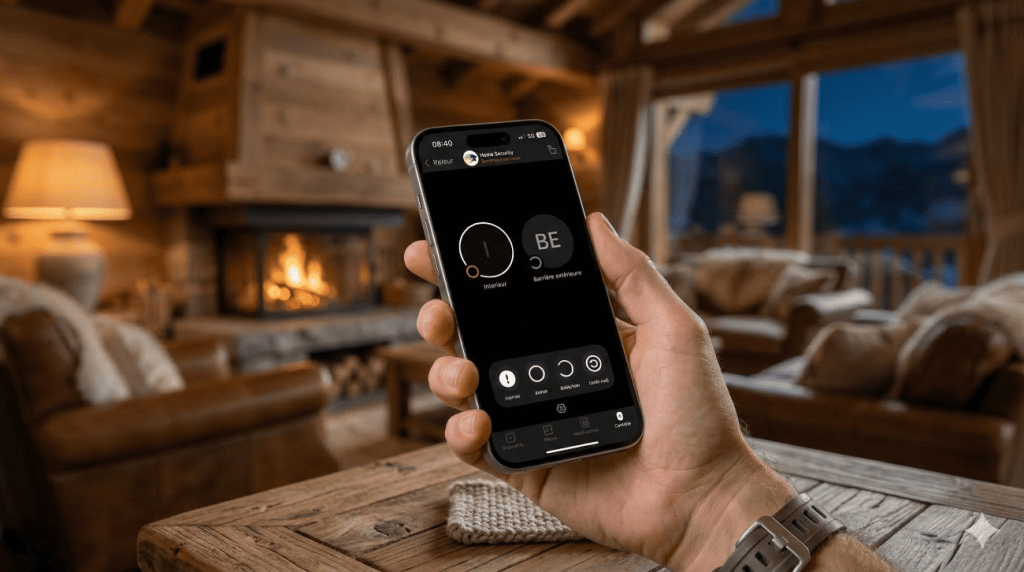
Why is the Ajax alarm getting so much attention? When you’re looking to secure your home, you’ll quickly come across a wide range of options. Some alarm systems are very basic, while others are more comprehensive, but it’s not always easy to understand what really sets one system apart from another. That’s exactly why the Ajax alarm has generated so much interest: it doesn’t just make a noise when a sensor is triggered. It was designed as a connected security solution, capable of detecting, transmitting, alerting, and helping you respond more quickly. For a homeowner, the point isn’t to have a “more high-tech” system just for the sake of it. The appeal lies in having an alarm that works reliably day-to-day, remains easy to use, clearly communicates information, and integrates seamlessly with other tools like video surveillance or remote monitoring. The Ajax alarm is appreciated because it meets this very practical need: better protecting your home without ending up with a system that’s complicated to understand. What exactly is an Ajax alarm? An Ajax alarm system consists of a control panel, detectors, sirens, and control devices such as a keypad, a remote control, or a mobile app. The control panel plays a crucial role: it receives information from the various detectors, analyzes it, and determines the appropriate response. If a window sensor signals that a window has just been forced open, or if a motion detector detects movement in a monitored area, the control panel immediately processes this information. One of the key features that sets the Ajax alarm apart from a more basic system is the quality of communication between its components. In many older systems, a sensor sends raw data, and the rest of the system boils down to a siren. With a better-designed system, the information is clearer. We know which sensor was triggered, in which zone, and at what time, and this information can be transmitted to the homeowner or a remote monitoring center. In other words, the alarm is no longer simply a device that “scares” the intruder. It becomes a tool that also helps occupants understand the situation and act with greater discernment. The first real advantage: smarter detection The primary advantage of an Ajax alarm lies in the quality of its detection. When people think of a motion detector, they often picture a small box that reacts to any movement. In reality, that’s the whole point: a good detector shouldn’t just detect—it should detect accurately. In a home, two problems must be avoided. The first is missing a real intrusion. The second is triggering too many false alarms. An alarm that goes off for no reason eventually wears down its users. They’re more likely to disable it, trust it less, or react more slowly when it sounds. That’s why the quality of the sensors plays a central role. An Ajax alarm relies on detectors designed to better distinguish between normal situations and suspicious ones. Without getting too technical, this means the system doesn’t “see” the world as a simple on/off switch. It analyzes variations, movements, and deviations from expected behavior. For the user, this translates to a more reliable system—and therefore one that remains trustworthy over time. This is a key point, because the true effectiveness of an alarm system depends not only on its sound volume, but on its ability to trigger the right alert at the right time. The second advantage: much clearer feedback Many traditional alarms simply warn that something is happening, without actually letting you know what. One of the key benefits of an Ajax alarm is precisely the clarity of the information it provides. If an event occurs, the user can quickly determine which zone is affected and which sensor triggered the alarm. This level of detail completely transforms the user experience. Instead of receiving a vague alert, you get more useful information. This allows you to decide faster on the appropriate course of action. If the alarm is paired with video surveillance, this understanding becomes even more immediate. The alert and the image can then complement each other. We no longer just know that there is a problem; we better understand what is happening. In practice, this also improves remote surveillance management. The more precise the reported information is, the more effectively operators can respond. This is a very tangible benefit, even for a homeowner who isn’t familiar with the technical aspects. The third advantage: easier to use for the whole family A good alarm system is useless if it’s too complicated to use. This is a point that’s often overlooked. In a home, several people may need to interact with the system: parents, teenagers, authorized family members, and sometimes even trusted staff, depending on the situation. If arming and disarming the system is confusing, or if the rules for using it are too complicated, the system quickly becomes a burden. The Ajax alarm is also popular because it simplifies the experience. Remote control, clear commands, and more intuitive operation allow households to take greater ownership of their home security. For a non-technical user, this is a real benefit. They don’t need to understand the system’s technical architecture to use it correctly. This simplicity is important because it encourages regular use. After all, an alarm is truly useful when it’s activated consistently, not just when you’re away for a long time. A system that’s more user-friendly therefore has a direct impact on security. The fourth benefit: better integration with video surveillance Today, many homeowners no longer want to choose between an alarm system and video surveillance. They want more comprehensive protection. That’s where the synergy between Ajax alarms and video surveillance comes in. An alarm detects and signals an event. Video surveillance, on the other hand, lets you see what’s happening or review what has happened. The two don’t serve the same purpose, but together they become much more effective. The alarm provides a rapid alert, and the camera provides context. For a homeowner, the benefit
Alarm and panic button: how to prepare your family to respond in an emergency?

Why prepare your family for emergencies at home? Having an alarm system at home is not enough. For it to be truly effective, it must be understood and used properly by everyone in the household. An alarm, detectors, possibly cameras, and a panic button connected to a remote monitoring center form a coherent whole. But the decisive factor is how your family will react when something happens. Emergency situations at home can take many forms. Attempted break-ins, suspicious activity around the property, home invasions, but also illness, falls, or sudden problems requiring a quick response. In all these cases, stress can cause people to lose their composure. This is precisely why a well-designed alarm system, combined with a panic button and simple rules, can transform a potentially panicked situation into a controlled response. Preparing your family means explaining how the alarm system works. What the panic button does, and above all, when to use it. The aim is not to scare anyone, but to give everyone clear guidelines. So that they feel protected and capable of acting when necessary. Panic button: what exactly are we talking about? The panic button is an additional component of the alarm system. It can take various forms. Small, discreet wall-mounted box, a remote control, a concealed switch, or even a button integrated into a mobile app. In all cases, it has a simple, single function. Immediately trigger an alert without having to enter a code or manipulate the alarm interface. Unlike a conventional alarm, which is often linked to a sensor (opening, motion, or shock detector), the panic button is activated by a person. It is designed for moments when a family member feels threatened, in danger, or witnesses a serious situation. One press is enough to send an alert to the remote monitoring center, which will then apply a specific protocol. This includes verification, confirmation, calling the police or emergency services, and informing predefined contacts. The difference between this and a simple phone call is that the panic button is integrated into the security system. The alert sent to the monitoring center is not a vague request, but a priority signal. It is associated with a contract, an address, and a known context. This avoids wasting time and allows for a more structured response. When should you use a panic button at home? To ensure that the whole family understands what the panic button is for, it is important to clarify the situations. Intrusion or attempted burglary immediately spring to mind. If someone tries to force a door open, enters the garden suspiciously, or tries to enter while the house is occupied, the panic button can be used to signal the threat without attracting the attention of the person outside. This is particularly relevant in situations involving home invasion or attempted assault. But the panic button is not limited to security against intruders. It can also be useful in the event of illness, a fall, or a sudden health problem. A person alone at home who loses their balance or feels very ill may not be able to find their phone or dial a number. An accessible button, located in strategic places or carried on one’s person, makes it easier to call for help quickly. There are also more ambiguous situations. Someone loitering around the house, someone ringing the doorbell insistently and claiming to be a technician, a vehicle parked suspiciously in front of the property. In these cases, the panic button allows you to trigger an alert while retaining the initiative. It should not be used at the slightest sign of concern. But remember that in cases of serious doubt and a feeling of threat, activation is justified. The challenge for your family is to understand that this is neither a gadget nor a function reserved for unrealistic extreme scenarios. The panic button is a concrete security tool, designed for moments when you need outside help very quickly. How do I explain the panic button to each member of the family? Raise awareness among children without frightening them With children, the challenge is to strike a balance between education and reassurance. It’s not about telling them dramatic scenarios. It’s about explaining to them that the house is equipped to protect them, and that the panic button is part of that protection. The message can be simple. This button is only to be used in case of danger or if something very serious happens. You can tell them that pressing it will call people whose job it is to help, and that it should only be done if an adult is unable to do so. It is important to emphasize that they should never “play” with it and that a false alarm is not without consequences. But you also need to reassure them. This button is there for their safety; it does not exist because the house is in constant danger. Empowering teens For teenagers, the logic is different. They are often left home alone, coming home earlier or going out later. They need to understand that in the event of an abnormal situation, the panic button is one of the tools they can use, just like calling their parents or the police. It is useful to explain how the alarm system works as a whole. Arming, disarming, cameras, and the role of remote surveillance. The conversation can be very direct. If you hear someone trying to force a door, if you see someone loitering around the house suspiciously, if someone you don’t know insists on coming in, don’t open the door. Get yourself to safety and press the panic button. The idea is to give them a plan of action so that they are not left helpless when the time comes to make a decision. Including adults and vulnerable individuals in the process For adults, it is important to clearly understand the procedure and be comfortable with the equipment. Too often, certain members of the household leave the use of the
Control panel, detectors, keypad: Understanding your alarm system.

Understanding the architecture of an alarm system When it comes to protecting your home, the concept of an “alarm system” may seem obvious. However, behind this term lies a set of complementary elements, each with a specific role to play in ensuring effective and responsive security. An alarm system is not just a siren or a box mounted on a wall; it is an organized network of technologies, sensors, and interactions that detect an intrusion, validate it, and trigger appropriate responses. The alarm control panel: the brain of your system The central element around which everything revolves is the alarm control panel. This is the control unit, the brain of the system. It receives information from all the sensors, analyzes each signal, and decides what action to take. It manages internal communications, activates the alert modules, and can communicate with a remote monitoring center if the system is supervised remotely. Without this control panel, the detectors would be isolated and ineffective. Detectors: monitoring and alerting at the slightest anomaly Motion detectors, opening detectors, shock detectors, etc. These components are the eyes and ears of the security system. Motion detectors analyze a given volume to detect any suspicious temperature variations or movements. Opening detectors are installed on doors and windows to signal any unauthorized opening. Some more specific detectors detect shocks or vibrations, which are ideal for securing sensitive entry points. Specialized detectors: smoke, gas, carbon monoxide More comprehensive systems can also incorporate environmental sensors, such as smoke detectors, carbon monoxide detectors, or gas leak detectors. These elements enhance the overall security of the home beyond simple intrusion protection. Sirens and alerts: deterrence and immediate response When a suspicious signal is detected, the alarm devices take over. An indoor siren triggers a loud audible signal in the home, which is often enough to scare off the intruder. Outside, a visible siren alerts the neighborhood. The element of surprise and acoustic stress are effective weapons against a burglar in action. Control interfaces: easily control your alarm The alarm system must remain easy to use on a daily basis. The wall-mounted keypad allows the alarm to be activated and deactivated using a code. Remote controls and contactless badges simplify access for residents. Today, mobile apps offer comprehensive remote management, allowing users to check the status of the system, receive real-time alerts, and manage authorized users. Surveillance cameras: see, record, deter Connected cameras are an effective addition to an alarm system. They allow you to monitor sensitive areas, record intrusions, and visually alert occupants or a central monitoring station. With night vision and intelligent motion detection, they filter out unnecessary alerts and enhance the feeling of security. Remote surveillance: professional security around the clock A system connected to a remote monitoring center allows for constant human supervision. In the event of a suspicious detection, an operator investigates and, if necessary, alerts the police. This responsiveness is essential, especially in sensitive contexts such as isolated homes in Savoie or Haute-Savoie. The panic button: a discreet alert in case of danger The panic button allows an occupant to manually trigger a silent alarm without the intruder noticing. Ideal in cases of home invasion, it immediately activates a verification process and can speed up the arrival of emergency services on site. Best practices for enhancing the effectiveness of your alarm system Even with a comprehensive system, security also depends on simple habits: locking all openings properly, avoiding leaving valuables in plain sight, simulating a presence during absences, and educating the entire family on the correct use of the system. Why trust Home Security for your installation? Every home is unique. That’s why Home Security conducts a comprehensive audit before any installation. Operating in Savoie and Haute-Savoie, we serve Megève, Combloux, Chamonix, and all rural and urban areas in the region. Our expertise covers installation, configuration, maintenance, and support for all components of your system. The Home Security team offers you a tailor-made solution, adapted to your lifestyle, the layout of your home, and any environmental constraints. Our 24-hour remote monitoring and maintenance contracts guarantee the long-term proper functioning of your system. Every detail matters when it comes to your safety. A good security system is not just a box or a siren. It is a coherent organization of several components, all of which are essential. The alarm control panel coordinates detectors, cameras, and sirens to respond effectively in the event of a threat. Adding a panic button or 24/7 remote monitoring further enhances your peace of mind. At Home Security, we know that your peace of mind deserves a reliable, scalable, and tailored solution. For an optimized installation, contact our teams and benefit from customized support.