
The term “home-jacking” is increasingly being used in discussions about home security. It refers to break-ins that occur while the occupants are present, often accompanied by threats or violence, with the aim of stealing property such as car keys, valuables, cash, and confidential documents. Although the phenomenon remains marginal compared to traditional burglaries, its psychological impact is significant. The fear of violent intrusion, even if rare, is prompting many households to protect themselves against this type of attack.
What is home-jacking?
Home invasion is not legally defined as a separate offense in the French penal code. It covers a range of serious offenses: burglary, robbery with violence, false imprisonment, and armed intrusion. What makes it unique? It occurs in the presence of the occupants and often involves some form of physical or psychological coercion.
The attackers’ goal is to surprise their victims and directly extort what they want, particularly car keys, access codes, or items that cannot be stolen during a simple silent break-in.
Statistics and context
In 2023, data from the Central Office for the Fight against Organized Crime (OCLCO) reported 515 incidents or attempts of home-jacking in France, an increase of 8% compared to 2022. In comparison, more than 217,100 burglaries were recorded, which makes home jacking an extremely rare phenomenon, but one that cannot be ignored.
The anxiety-inducing effect of this type of theft, sometimes referred to as forced burglary or violent intrusion, is all the more powerful because it challenges the very notion of the home as a sanctuary. Victims, often chosen for the value of their possessions or their isolation, are left severely traumatized.

Targeted profiles and precise methods
Home-jacking incidents mainly target properties believed to be well-equipped: detached houses, villas, chalets, or residences with vehicle access. The methods used vary, but often rely on the element of surprise: breaking in early in the morning, cutting off the power supply, forcing entry through the garage, or simulating an emergency.
In these circumstances, homeowners need to think beyond simple burglary and consider a prevention strategy against home-jacking: anticipation, detection, alert and intervention.
How can you effectively protect yourself from home invasion?
Protection against home-jacking relies on active security, which anticipates risks and enables an immediate response in the event of an intrusion. More than just a deterrent, it is an intelligent device capable of detecting, alerting, and triggering interventions without delay.
At the heart of this protection is an alarm system connected to a remote monitoring center. In the event of an anomaly or forced entry, impact on a door, or unusual movement, an alert is sent in real time to qualified operators. They verify the situation and can contact the police if necessary. This rapid response chain significantly reduces the risk of confrontation and limits damage.
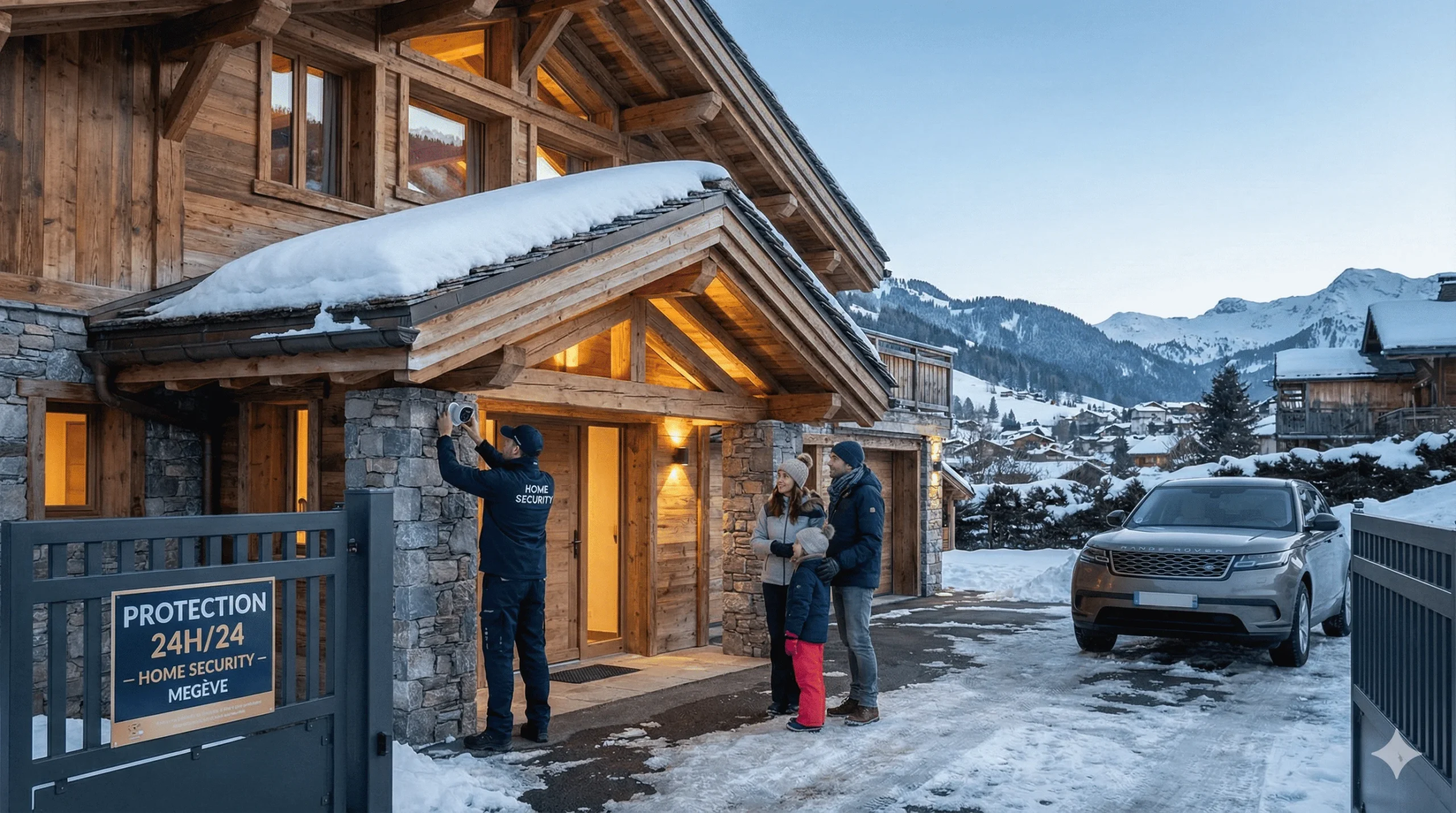
Surveillance cameras complete the system. Whether installed outdoors or indoors, they allow you to see what is happening, record intrusions, and monitor your home remotely from a mobile app. In mountainous areas, particularly in Savoie and Haute-Savoie, cameras with night vision and cold resistance are particularly recommended. They offer constant visibility, even in extreme conditions, such as in Megève, Chamonix, or Sallanches.
An often underestimated but highly effective feature is the panic button, which is directly connected to the remote monitoring center. Discreetly placed in the home or carried on your person, this button sends a silent alert in the event of a threat. This can trigger an intervention without the attacker being aware of it, thus avoiding any risk of escalation.
Technology is no substitute for reflexive vigilance. Even in a home equipped with security systems, it is crucial to:
- always lock all doors and windows, even during the day;
- never leave keys visible or accessible;
- avoid announcing extended absences publicly, especially on social media;
- teaching children or vulnerable people never to open the door to strangers and to recognize a suspicious situation.
An effective security system, combined with cautious habits, creates a deterrent for intruders. Above all, in the event of an attempted home invasion, it allows you to react quickly and safely, without direct confrontation.
Home Security: protection tailored to homes in Savoie and Haute-Savoie
In response to these risks, Home Security offers tailor-made protection solutions. Based in Savoie and Haute-Savoie, the company operates in Megève, Chamonix, Sallanches, and all surrounding Alpine areas.
Its expertise is based on a comprehensive approach: installation of connected alarms, smart surveillance cameras, panic buttons, automatic barriers, motorized gates, and above all, 24-hour remote monitoring. Each device is configured according to the type of home and the actual needs of its occupants.
Its local presence allows for rapid response in the event of breakdowns or maintenance, and personalized follow-up to ensure the durability of the installations. For households concerned about their security, Home Security offers a reliable, concrete solution adapted to today’s realities.
FAQ – Frequently asked questions about home-jacking
Is home invasion common in France?
No. Cases remain marginal compared to traditional burglaries. However, the violence and media coverage of certain incidents create a strong sense of insecurity.
How do I know if my home is a potential target?
Isolated homes that are easily accessible and clearly well-equipped (luxury cars, no shutters, etc.) are more at risk. A security audit with Home Security can help you assess the risks.
Is an alarm enough to protect me?
An alarm alone is useful, but its true effectiveness depends on its connection to a remote monitoring center and a rapid response. Adding cameras and a panic button optimizes protection.
Is home invasion covered by insurance?
Yes, generally, but only if the security measures specified in the contract have been implemented. It is essential to check the terms of your home insurance policy.


